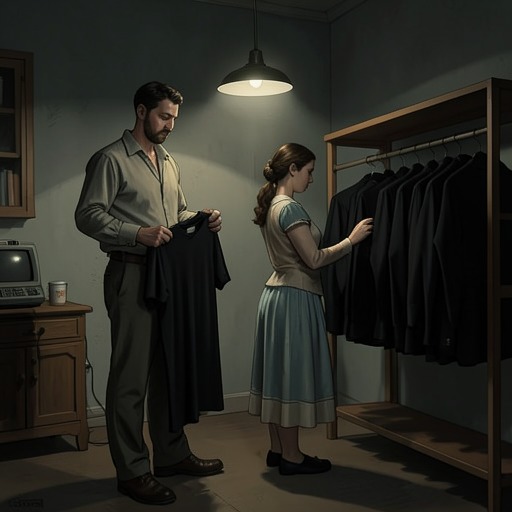
Della and Zaen
One Thousand and One NightsDella and Zaen’s relationship grows from childhood familiarity into a long, lopsided-looking courtship, then changes when Zaen finally expresses the friendship beneath his thousand proposals. Its decisive turn comes not through wealth, poetry, or persistence alone, but through a bracelet that shows Della he understands how she wishes to be loved: as a friend and a person, not a trophy to be won.
Childhood and Courtship
Zaen begins courting Della when she is six and he is seven, and continues sending her a love letter and marriage proposal on the first day of every week. Della recalls that she learned to read at the same time Zaen had barely learned to write. The ritual outlasts changes in weather and occasion and every rejection she gives him; by the time she tells the story, she finds the regularity more exasperating than romantic. Her companions are swept up in the constancy, but Della insists that the proposals have tried her resolve.
The persistence is not evidence, in Della’s eyes, that Zaen knows her or that his professed love is real. She calls him a dear, but describes them as friendly acquaintances and says she has never given him cause to think highly of her, much less fall in love. Other women see a contradiction: she expects his suits and speaks as though they have never been apart, yet continues rejecting him. Their outside view catches a genuine closeness, but misses what Della needs before that closeness can become romance.
Letters and Misread Signals
Years later, the scale of Zaen’s devotion is visible in his quarters beside the stables. Hundreds of letters are arranged in an arc above his writing table, carefully kept in compartments intended for scrolls. He has tucked flowers into them, still in bloom, and preserved every reply Della sent. The display gives physical form to a courtship built on repetition: every proposal has been retained, but the letters’ abundance has not persuaded Della that Zaen sees her as she sees herself.
Tad recognizes the letters as evidence that Zaen has held on to every answer, while Claire observes that Della has rejected him about a thousand times. Later, Tad tells Zaen that the curse on Della has been lifted and urges him to try something different: the letters are touching, but she needs something else from him. His advice identifies the distinction the couple has struggled to cross. More declarations of devotion cannot resolve a doubt created by the mismatch between Zaen’s romantic performance and Della’s need to feel understood.
The Bracelet and Recognition
Zaen asks Della for a private audience and takes her to sit beside a stone fountain. He tells her he will leave her be if she does not love him, then places a friendship bracelet in her hand. Rather than offer a costly jewel, he makes the gift a record of their shared history. White horsehair recalls the pony Della received; red recalls the stallion that threw her and the moment Zaen caught her, making her smile at him for the first time; black comes from a mare he chose because her regal exterior concealed a sweet spirit he compares to Della’s. A bead for each of them bears their carved initials.
The bracelet is intimate because it refers to moments Della lived, not to an idealized lady whom a suitor hopes to possess. Zaen explains that years of searching had not produced a gift worthy of her, and that no amount of gold or jewels could express what their shared time meant to him. Della smiles, then weeps: she had heard poetry and pretty words but had not known, in her heart, an enduring love stood behind them. The humble object succeeds where the preserved letters could not because it makes their friendship legible as something Zaen treasures in itself.
Reconciliation and Engagement
Della explains that she did not want gold or diamonds. She wanted someone who would trust her with everything he did not have and believe she could love him back, despite the assumption that she was spoiled and cared only for fine possessions. Zaen answers that he had always known her better than that, but Della points to the gap between his belief and what he had actually shown. His thousand proposals spoke of how he saw her; they had not expressed his understanding of how she saw herself.
She says the bracelet represents who she wants to be to the man she marries: not a prize won through valiant effort or a trophy of his greatness, but someone treasured always. Her rejection of the proposals had been a way of protecting her heart. She feared the poetry was insincere and would not commit to a man who loved only an imagined version of her; though she enjoyed their daily encounters, she hardened her heart against romance. Zaen’s repeated proposals, for all their constancy, had not answered that fear.
Zaen insists that he loves the real Della and that his love has deepened with each passing day. He calls the thousand-and-first attempt the one that found her heart, then kneels and asks her to be his friend for life and marry him. Della accepts without gold or jewels, on the condition that he first and forever remain her dearest friend. Their engagement therefore resolves the courtship by changing its terms: love is no longer proved by the number of proposals, but by the friendship and recognition the bracelet makes visible. The scene closes with Zaen drawing her into his arms and whirling her around.